
ARENAS, MARKETS AND TEAMS
Proposed League with Target City Franchises and Arenas
The National Hockey Federation is seeking Franchise Founders to establish professional hockey teams in strong, underserved markets across Canada and the United States.
The NHF is being developed as an independent professional league positioned between the NHL and AHL in playing level, market ambition and player opportunity.
Nicholas Division

Regina Herds
Regina, Saskatchewan
Arena: Brandt Centre
Capacity: about 6,000 seats
City population: 226,404 (2021 Census)
Capacity: about 6,000 seats
City population: 226,404 (2021 Census)
- Strong Saskatchewan hockey tradition and a long-established WHL audience.
- Provincial-capital market with a meaningful regional business base.
- Natural Saskatchewan rivalry potential with Saskatoon.
Photo: Asessippi41 / Wikimedia Commons, CC BY-SA 4.0.

Saskatoon Loons
Saskatoon, Saskatchewan
Arena: SaskTel Centre
Capacity: about 15,100 for sporting events
City population: 266,141 (2021 Census)
Capacity: about 15,100 for sporting events
City population: 266,141 (2021 Census)
- Large, established major-event arena already built for hockey.
- Longstanding WHL culture through the Saskatoon Blades.
- Central Saskatchewan location gives the club a broad regional draw.
Photo: SpiritedMichelle / Wikimedia Commons, CC BY 4.0.

Victoria Spyhoppers
Victoria, British Columbia
Arena: Save-On-Foods Memorial Centre
Capacity: 7,000 for hockey
City population: 91,867 (2021 Census)
Capacity: 7,000 for hockey
City population: 91,867 (2021 Census)
- Vancouver Island provides a distinct geographic fan market.
- The Victoria Royals already demonstrate sustained major-junior hockey interest.
- A downtown arena and tourism economy can support game-night traffic and sponsorship.
Photo: J. Newall (Sandtrooper) / Wikimedia Commons, CC BY 3.0.

Kelowna Bees
Kelowna, British Columbia
Arena: Prospera Place
Capacity: 6,886 for hockey
City population: 144,576 (2021 Census)
Capacity: 6,886 for hockey
City population: 144,576 (2021 Census)
- Fast-growing Okanagan market with a strong regional identity.
- The Kelowna Rockets provide evidence of an established hockey audience.
- Downtown location, tourism and regional business activity strengthen premium-event potential.
Photo: Aidanrice206 / Wikimedia Commons, public domain.

Portland Rain
Portland, Oregon
Arena: Veterans Memorial Coliseum
Capacity: approximately 10,000 for hockey, configuration dependent
City population: 652,503 (2020 Census)
Capacity: approximately 10,000 for hockey, configuration dependent
City population: 652,503 (2020 Census)
- Large U.S. market with an existing WHL tradition through the Winterhawks.
- The Rose Quarter provides established sports and entertainment infrastructure.
- Pacific Northwest geography can create compact regional rivalries and travel links.
Photo: Steve Morgan / Wikimedia Commons, Creative Commons.
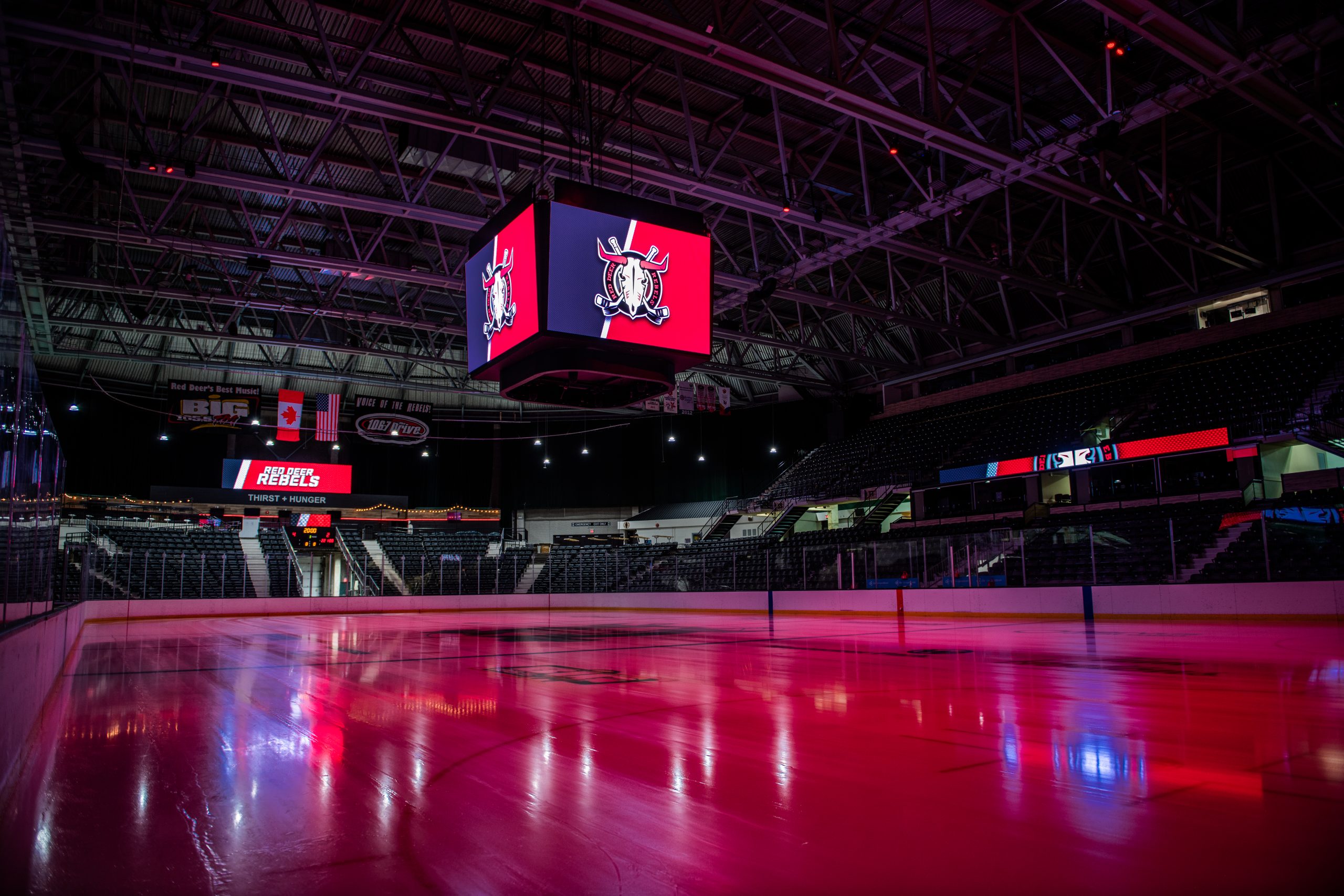
Red Deer Outlaws
Red Deer, Alberta
Arena: Marchant Crane Centrium
Capacity: 6,623 hockey full house
City population: 100,844 (2021 Census)
Capacity: 6,623 hockey full house
City population: 100,844 (2021 Census)
- Deep hockey culture anchored by the Red Deer Rebels.
- Central Alberta position can draw from communities between Calgary and Edmonton.
- The Centrium is a purpose-built major hockey and event venue with commercial facilities.
Arena image: OES Scoreboards.

San Antonio Killerbees
San Antonio, Texas
Arena: Frost Bank Center
Capacity: 16,151 for hockey
City population: 1,434,625 (2020 Census)
Capacity: 16,151 for hockey
City population: 1,434,625 (2020 Census)
- By far one of the largest city populations in the proposed field.
- The building has hosted AHL hockey and accommodates an NHL-sized rink.
- Texas offers sponsorship scale and room to build a distinct hockey identity.
Photo: Atristan 77 / Wikimedia Commons, CC BY-SA 3.0.

Arizona Scorpions
Tempe, Arizona
Arena: Mullett Arena
Capacity: 5,000
City population: 180,587 (2020 Census)
Capacity: 5,000
City population: 180,587 (2020 Census)
- Modern 5,000-seat arena on the Arizona State University Tempe campus.
- Includes two NHL regulation-size ice sheets, 20 luxury suites, a club lounge and premium seating.
- Existing hockey infrastructure gives the Arizona Scorpions a ready-made professional venue.
Photo: Kyvuh / Wikimedia Commons, CC0.
Warren Division

Quebec Blizzards
Quebec City, Quebec
Arena: Centre Vidéotron
Capacity: 18,259 for hockey
City population: 549,459 (2021 Census)
Capacity: 18,259 for hockey
City population: 549,459 (2021 Census)
- Modern, large-capacity hockey arena with premium amenities.
- Exceptionally strong hockey identity and established junior-hockey support.
- Large French-language market gives the league a distinctive regional presence.
Photo: Dave Paige / Wikimedia Commons, CC BY 4.0.

London Fogwoods
London, Ontario
Arena: Canada Life Place
Capacity: 9,090 for hockey
City population: 422,324 (2021 Census)
Capacity: 9,090 for hockey
City population: 422,324 (2021 Census)
- One of Canada’s strongest junior-hockey markets through the London Knights.
- Downtown arena with premium seating and suites already configured for major hockey.
- Large Southwestern Ontario catchment with strong drive-market access.
Photo: Gogerr / Wikimedia Commons, CC BY 4.0.

Omaha Paradise
Omaha, Nebraska
Arena: CHI Health Center Omaha
Capacity: 17,100 for hockey
City population: 486,051 (2020 Census)
Capacity: 17,100 for hockey
City population: 486,051 (2020 Census)
- Large central U.S. arena with proven ice-hockey capability.
- Omaha has an established college-hockey audience and sports culture.
- Central geography could help bridge northern and southern U.S. markets.
Photo: Collinulness / Wikimedia Commons, CC BY-SA 3.0.

Kansas City Stockmen
Kansas City, Missouri
Arena: T-Mobile Center
Capacity: 17,544 for an NHL hockey configuration
City population: 508,090 (2020 Census)
Capacity: 17,544 for an NHL hockey configuration
City population: 508,090 (2020 Census)
- Major-league-quality downtown arena with a full hockey configuration.
- An NHL preseason game at the building sold out at 17,544, demonstrating event-level hockey demand.
- Large metropolitan corporate and media base offers sponsorship potential.
Photo: Michael Barera / Wikimedia Commons, CC BY-SA 4.0.

K&W Wanderers
Kitchener–Waterloo, Ontario
Arena: Kitchener Memorial Auditorium
Capacity: 7,131 for hockey
Kitchener population: 256,885 (2021 Census)
Capacity: 7,131 for hockey
Kitchener population: 256,885 (2021 Census)
- The broader Waterloo Region had 587,165 residents in the 2021 Census.
- The Kitchener Rangers have built a durable, high-attendance hockey culture.
- Dense Southern Ontario geography supports road travel and regional rivalries.
Photo: Jfvoll / Wikimedia Commons, Creative Commons.

Oklahoma Trails
Oklahoma City, Oklahoma
Arena: Paycom Center
Capacity: 15,152 for an ice rink
City population: 681,054 (2020 Census)
Capacity: 15,152 for an ice rink
City population: 681,054 (2020 Census)
- Large U.S. city with a major downtown arena capable of installing ice.
- Previous AHL hockey in Oklahoma City provides a professional-hockey reference point.
- Central location can support a south-central U.S. cluster with Kansas City and San Antonio.
Photo: Dvash788 / Wikimedia Commons, Creative Commons.

Halifax Schooners
Halifax, Nova Scotia
Arena: Scotiabank Centre
Capacity: over 10,500
Halifax Regional Municipality population: 439,819 (2021 Census)
Capacity: over 10,500
Halifax Regional Municipality population: 439,819 (2021 Census)
- Largest major-event arena in Atlantic Canada and an established hockey building.
- The Halifax Mooseheads have demonstrated a strong major-junior fan base.
- Halifax can serve as a regional Atlantic Canadian flagship market.
Photo: Tony Webster / Wikimedia Commons, CC BY 2.0.

St. John’s Navigators
St. John’s, Newfoundland and Labrador
Arena: Mary Brown’s Centre
Capacity: 6,287 for hockey
City population: 110,525 (2021 Census)
Capacity: 6,287 for hockey
City population: 110,525 (2021 Census)
- Long history of AHL, ECHL and major-junior hockey in a dedicated downtown arena.
- The St. John’s CMA had 212,579 residents in the 2021 Census and draws from a wider provincial fan base.
- A distinctive Newfoundland identity can give an NHF club a strong local brand.
Photo: Quintin Soloviev / Wikimedia Commons, Creative Commons.
Population figures use the 2021 Statistics Canada Census for Canadian markets and the 2020 U.S. Census for U.S. markets. Arena capacities can vary by configuration, renovations and event setup.
What the NHF evaluates in Potential Franchises
| Arena | Suitability for professional hockey, availability, fan experience and realistic lease economics. |
| Market | Population, regional draw, hockey interest and broader sports demand. |
| Commercial base | Corporate sponsorship, premium seating, hospitality and local business relationships. |
| Ownership | Depth, credibility, capitalization and operating ability of prospective local ownership. |
| Geography | Travel efficiency, divisional fit and relationships with other prospective markets. |
| Media & community | Local media, streaming, grassroots hockey and community-engagement potential. |
A local franchise must be more than a schedule
The intended club model gives local ownership the responsibility to build a team enterprise: management, employees, sponsorship relationships, ticketing, community programs, merchandise and a distinctive local identity — all within league-wide standards.
 mwbd44-lhedm